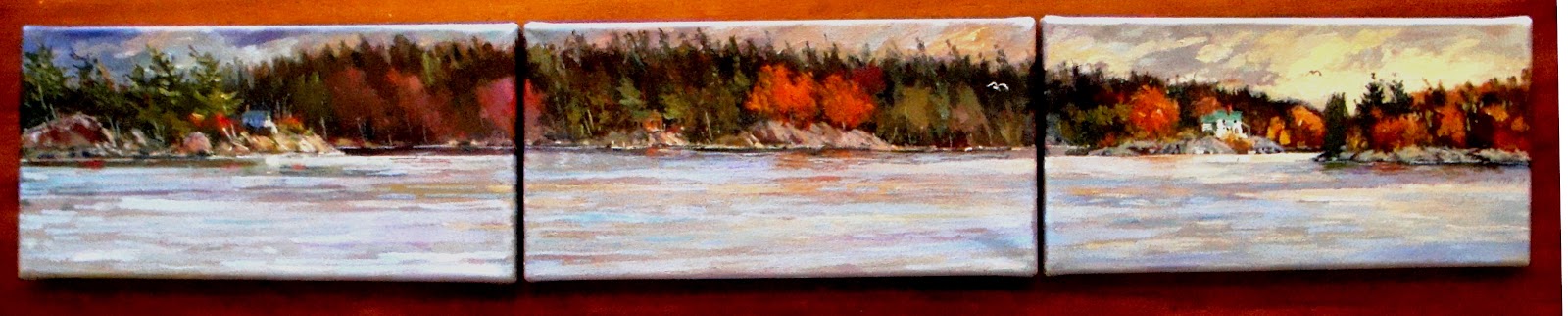
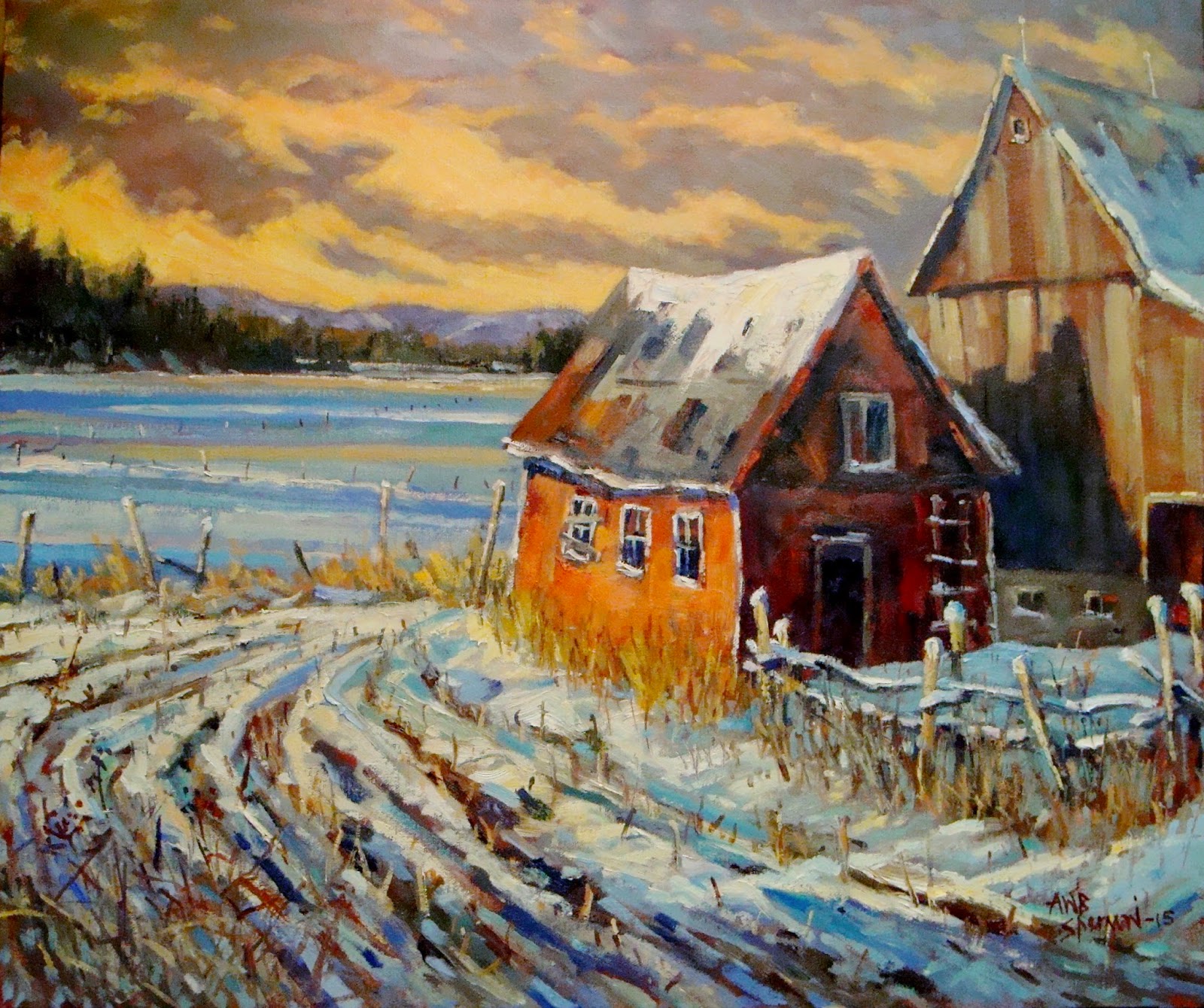
In my classroom, as in my own life... I have tried to view each "failure" more as a "learning opportunity." Hence, at the conclusion of the initial process one's duty is to evaluate what was learned, both positively and conversely... negatively. In subsequent attempts to improve, one can use both components learned to elevate performance and improvement... based more upon one's own standards and expectations.
I put this theory into practice within my painting process as well. As with all creative projects we undertake, our goal is to succeed. That is, we hope to end up with a product which lines itself up comparatively close to our original vision. In my own experience, complete perfection is a rarity... and a "pleasing painting" is most usually the general result to be expected.
Then... there are those frustratingly dark days of painting. Those discouraging days when nothing positive seems to happen. Or... the product is but a blurring resemblance to the inner vision in the end. I used to call them "Frisbees" because... quite literally, Frank and I would simply Frisbee them (no signature)... to their final plein air final resting places. A good number of them even today... await re-discovery in many remote areas north of Kingston.
I no longer continue this negative recycling practice. I save them... turn them to the wall, so that I can forget them. I occasionally sand them and paint over them. But for the large part, I find that I "rediscover" them... and when I do, most of the original disappointment and angst over the perceived failure to hit the bulls eye has disappeared. It is then that I find myself inspired to come at the original "Idea" from another angle.
The process that I employ... I fondly call "Imagineering". By that, I mean that I totally ignore the original concept... choosing only certain strong aspects of the painting that I believe have merit and could lead to a better solution and outcome. It takes courage to risk "wasting time" on a failure.... but in my teaching career... some of the many perceived "failures" who landed on my doorstep along the way turned out to be the benchmarks of success (their own) because they were able to be encouraged to "imagine"... and then commit themselves to work towards another reality.
My artistic rationale for reversing perceived failure is based upon that same template for success. Give everything your best shot. If you lose the pathway... take a break from it. Do something else. Then return... re-evaluate... re-vision and work outside of the box that you created for yourself in the first run.
I have chosen such a project to share with you today that I had great hopes for... even prematurely posted (in all its ugliness) on this site. I can't relate to you the embarrassment that I felt when I noted one day in the gallery that several things didn't add up... even visually make sense.
Here is the process that I just completed to recover my dignity and a true sense of joy in creating what I feel is a very good oil study. Trees have long been a strong subject interest in my plein air work. We can learn so much from trees... and about how they interact in the landscape that they share. They are elegantly dressed... ever-changing in appearance and firmly rooted in life. Even in death... they defy giving up and maintain dignity. I admire all trees greatly... and love to study and paint them.
This particular winter willow study had its origin in a jpeg that I had garnered just down the Parkway. It touched a nerve in me because our summer cottage had a humongous and ancient weeping willow that afforded our family gatherings shade and a place for children to climb and dream. Sadly..., it is no more.
Here is the digital image upon which I based my version of "Winter Willow" on a 24 x 20 inch canvas. The reference photo was rather ordinary... without character... or worse interesting detail. I began using the process of "Imagineering" by cropping the original image and zooming in on the trunk and ground area. It helped (some) to gain a starting point.

This is the end result of my first attempt to create a painting. At first glance it might appear to have been reasonably successful. However... closer attention shows glaring assumptions and unresolved visual miscues. In the trunk of the willow itself branches appear to cross over front to back awkwardly. The tree more closely echoes a snake-like Medusa... and less a lithe willow personage. More myth than truth.
In the background... young fir trees create an impression of an iron gate marching in equal intervals and thicknesses across the very shallow and indistinct middle ground. In summation... the painting violates too many necessary truths to remain believable. An embarrassing disaster for certain!

During the past week, I was preparing to go upstairs for some lunch when the painting caught the corner of my eye as I passed. There was "something" that resonated for me... so I set it beside my easel while I completed the current project. Upon completing that painting... I placed this "loser" on the easel and decided to "putz away" at it using the last paint on my palette... just for the fun of it. This is what appeared out of ... I don't no where... Honestly!

"Winter Sunscape"... now presents a white pine against a more clearly defined and open middle ground field of snow covered granite in shadow. The richly lit white pine trunk against the muted blues and purples creates a greater sense of depth. Gone is the incongruity cause by the flailing arms of the earlier willow.
I believe that this painting better represents the feeling and mood that I wished to convey previously.
Did I fail initially... or did I simply build upon and eliminate the earlier flaws and make better use of the stronger elements of composition that are still present in the second effort? You be the judge. I am satisfied with the new version and will include it in my fast-approaching exhibition. I believe it worthy of inclusion.
Hopefully, my experience here will encourage some of you to give some previous "failures" a second look. I will close this evening's post with a relevant quote from the American existentialist philosopher Rollo May which I believe lends itself to understanding the value and the importance of overcoming failure by further searching and risking... and not in simply giving up.
"There is a curiously sharp sense of joy - or perhaps better expressed, a sense of mild ecstasy- that comes when you find the particular form required by your creation."
Taken from:
No More Second Hand Art / Awakening the Artist Within
by Peter London
May you feel the true joy of creation by your own hand...
Good Painting... to ALL!!!!!!!